New Hampshire Wood Pellet
Service That 
Actually Delivers.

No more lugging bags from the store. We know NH roads, we know the weather, and we deliver right to your garage.

Heating with wood shouldn’t be a second job.

We’ve heard the horror stories from Granite Staters across the state.

“I can’t find a driveway delivery.”

“I live in NH and can’t find anyone who actually delivers pellets to my driveway. I’m tired of lugging 40‑lb bags from the store.”

Scrambling in the Cold

“By the time I figure out who delivers where I live, it’s already getting cold and I’m scrambling to find stock.”

The “Driveway Dump”

“The big pellet sites just dump everything in the driveway and leave-no stacking, no care, and the pellets end up wet.”

The NH Pellet Pro Promise

Garage-Ready Stacking

Pellets stacked neatly where you reach them, not dumped in the snow.

Real-Time NH Tracking

You’ll know exactly when our local drivers-who know NH roads-will arrive.

Guaranteed Dry Stock

We store our inventory in climate-controlled facilities. No wet bags, ever.
What are the best wood pellets to use?

Premium Brands. Locally Stocked.

Granite State Gold

High-BTU, Low-Ash Premium Hardwood

$349 / per ton

Best Value

Mountain Pine Blend

Fast-igniting, clean burning

$315 / per ton

Eco-Choice Softwood

Highest heat efficiency available

$389 / per ton

FAQ about New Hampshire Wood Pellets

Want to Learn More About this Convenient, Clean, Cheap Heating?

Yes. Wood pellets can go bad.

They do not spoil like food, but moisture ruins them. When pellets absorb water, they swell, crumble into sawdust, and lose heating value. Once that happens, they are basically unusable.

If stored dry, off the ground, and sealed, pellets can last many years with no real loss in performance. Basements with humidity, outdoor sheds without vapor barriers, or torn bags are the usual causes of failure.

Most pallets of wood pellets in the U.S. hold 50 bags.
Each bag is usually 40 pounds, so a full pallet weighs about 2,000 pounds (1 ton).
Some suppliers use 55 bags or 60 bags, but 50 is the standard you will see most often.

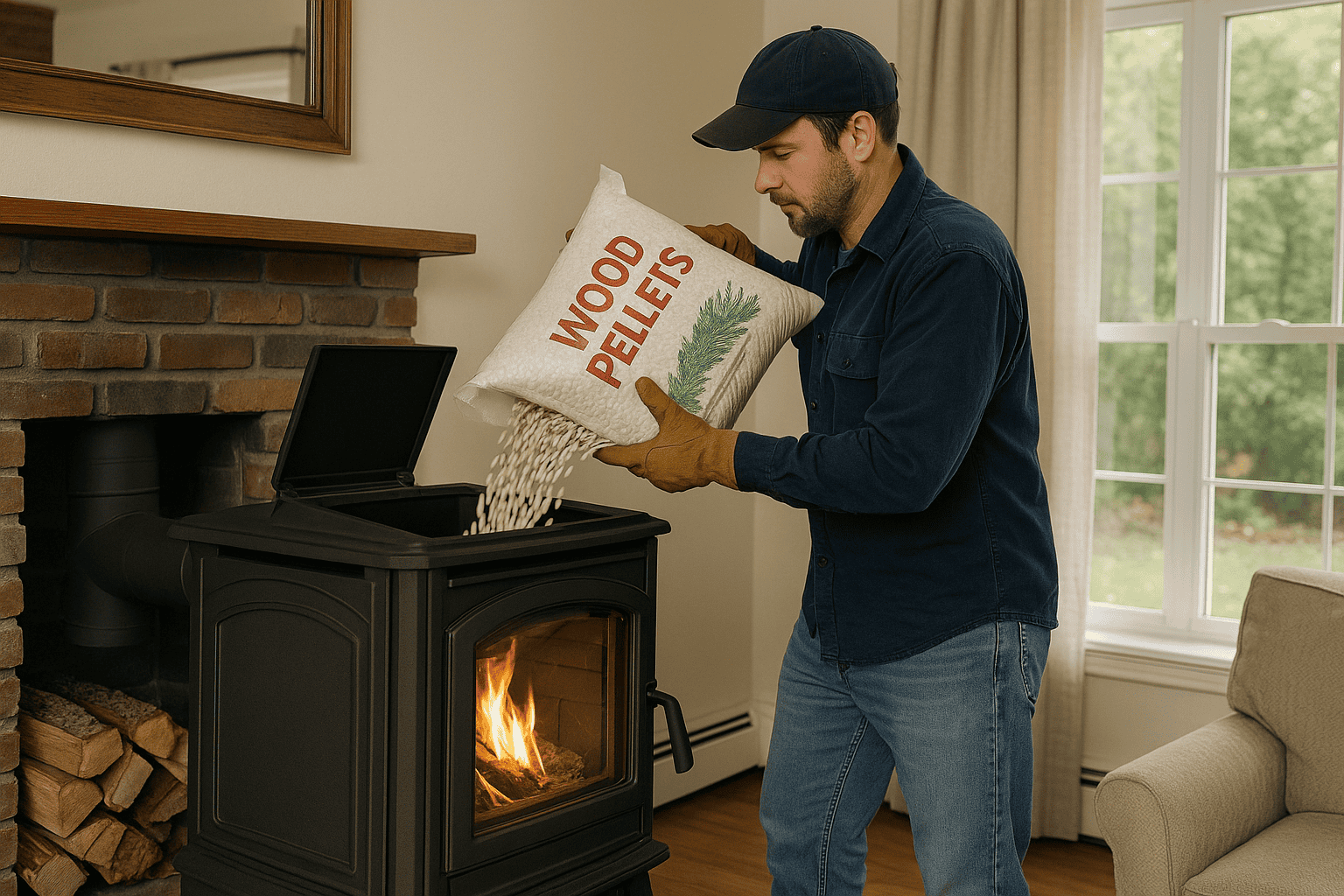
A wood pellet stove works by automatically feeding fuel and controlling the burn.
Pellets are poured into a hopper. An electric auger slowly moves them into a burn pot. An igniter lights the pellets. A fan adds air to keep the fire steady and pushes warm air into the room.

A control board adjusts pellet feed and airflow based on your heat setting. More pellets equals more heat. Less feed equals a lower burn.

Ash falls into a tray and is cleaned out occasionally. The stove needs electricity to run the auger, fans, and controls.

Wood pellets should be stored dry, sealed, and off the ground.
Best places:
Garage with low humidity
Basement only if it stays dry
Indoor storage room or utility area
Storage rules that matter:
Keep bags on pallets, not concrete
Use plastic wrap or sealed bins
Avoid outdoor sheds unless fully weatherproof
Never leave bags exposed to rain or snow
Moisture is the enemy.
If pellets stay dry, they stay good.

Yes. Wood pellets are usually cheaper than propane for home heating.
Typical comparison in the U.S.:
Wood pellets: lower cost per million BTUs
Propane: higher and more volatile pricing
Pellets also have steadier pricing across the season. Propane prices swing with oil markets and winter demand.