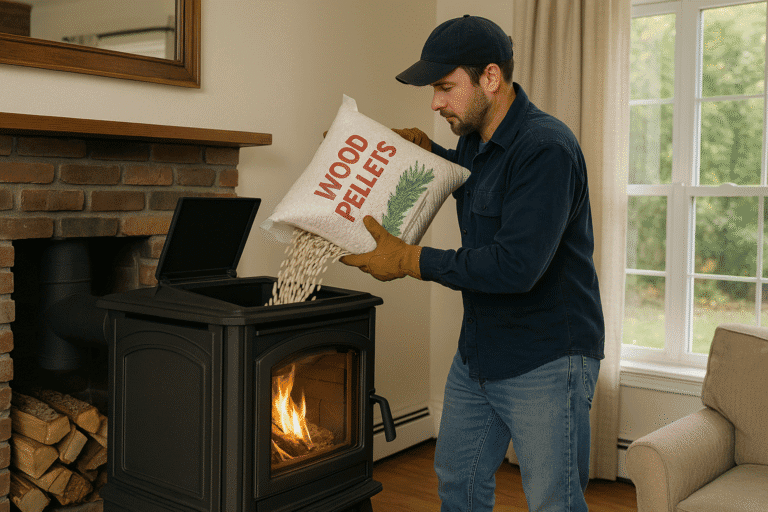
Pellet Stove Maintenance in New Hampshire
Pellet stove maintenance keeps your heating system safe, clean, and reliable through every New Hampshire winter. A well-serviced unit burns quality wood pellets efficiently, while a neglected one wastes fuel, clogs airflow, and puts your household at risk. This guide covers what technicians actually do during a professional service call, plus the weekly and seasonal tasks you can handle yourself.
What Happens During a Pellet Stove Cleaning
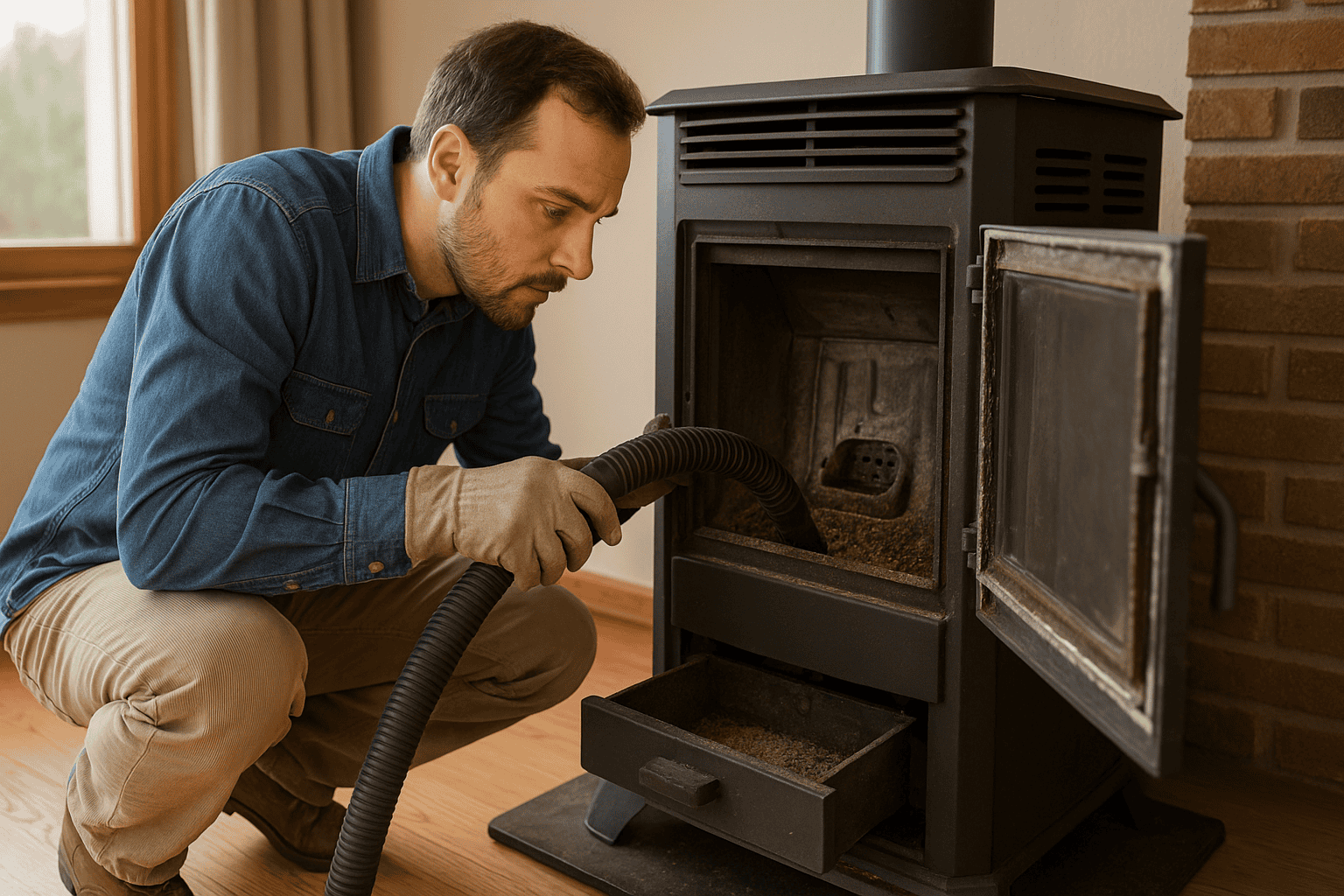
A full pellet stove cleaning targets every component that affects combustion and airflow. The technician starts by vacuuming loose ash from the burn pot, ash pan, and heat exchanger surfaces. Soot deposits on the exchanger act like insulation; even a thin layer cuts heat transfer by up to 50 percent.
Next comes the exhaust system. The flue pipe and chimney connector get brushed clear of creosote buildup, which is the main cause of house fires in New Hampshire homes. The blower and distribution fan are inspected for wear, and the hopper (the top-mounted fuel bin that feeds the screw conveyor, also called an auger) is emptied and wiped down.
Technicians trained on brands like Harman know how internal sensor calibration affects feed rates. That kind of detail separates a real service from a quick vacuum job.
Weekly and Monthly Tasks You Can Do Yourself
Empty the ash pan every five to seven burn days. Let the unit cool completely, unplug it, and use a shop vacuum rated for fine dust. Wipe the glass door with a damp cloth and a small amount of ash (it works as a mild abrasive). Check the burn pot for clinker buildup, those hard fused lumps that block air holes and cause incomplete burns.
Once a month, brush the heat exchanger fins and inspect the exhaust vent cap outside your house. Leaves, ice, or bird nests can restrict airflow and trigger a smoke backup into the room. These tasks take about 15 minutes and prevent most mid-season breakdowns.
Seasonal Checklist Before the Heating Season
Schedule your annual service in late August or September, before heating season demand spikes. A thorough pre-season inspection should cover:
- Full chimney and flue sweep to remove creosote
- Gasket inspection on the door, ash pan, and glass (replace if compressed or cracked)
- Blower amp draw test to catch bearing failure early
- Auger motor and feed system function check
- Electrical connections and control board diagnostics
- Piping and joint integrity, looking for rust, separation, or corrosion
One mistake I see repeatedly: homeowners skip the gasket check. A worn door gasket lets ambient air leak in, which throws off the air-to-fuel ratio and forces the unit to work harder. Replacing a $12 gasket can cut fuel consumption by 10 to 15 percent.
How Cleaning Frequency Affects Efficiency and Fuel Cost
Pellet-burning appliances operate best when airflow paths stay clear. Ash accumulation inside the firebox and air passages forces the blower to spin faster, drawing more electricity and reducing net efficiency. A unit rated at 85 percent efficiency might drop to 70 percent after just three weeks without basic cleaning.
For homeowners buying wood fuel in bulk across southern NH, that efficiency loss translates to roughly one extra ton of pellets per season. Consistent upkeep pays for itself.
Common Problems That Proper Care Stops
Ignoring routine service leads to predictable failures. The feed system jams when dust and debris clog the hopper throat. Back-pressure builds when the flue isn’t swept, triggering safety shutdowns. Carbon deposits on the igniter shorten its lifespan from five years to one.
A fireplace or wood stove has similar issues, but pellet stove systems add electronic controls and moving parts that need attention. The auger motor, circulation fan, and control board all have wear items. Catching a failing bearing early costs $40 in parts; waiting until it seizes costs $300 or more.
Choosing Between DIY Care and Hiring a Technician
Basic weekly tasks don’t require a professional. If you’re comfortable using a vacuum and a brush, you can handle ash removal, glass cleaning, and burn pot scraping on your own. Deep internal work is different. Disassembling internal piping, testing electrical components, and recalibrating sensors should go to a certified technician.
Most Manchester and Concord area dealers offer annual service contracts between $150 and $250. That covers a full pre-season inspection plus one mid-winter check, which is worthwhile if you rely on the unit as your primary heat source.
Frequently Asked Questions
How often should I schedule a professional service?
Book a full inspection and cleaning at least once per year, ideally before winter starts. Homes that burn more than three tons per season may benefit from a mid-winter check as well. Regular service stops soot buildup, keeps airflow strong, and catches worn parts early.
Can I handle all the upkeep myself?
You can manage weekly ash removal, glass cleaning, and burn pot scraping without help. For deep cleaning of the exhaust path, gasket replacement, and electrical testing, hire a certified technician. Improper disassembly can void warranties or create safety hazards.
Does a fireplace need similar care?
Yes. Any appliance that burns solid fuel produces ash, soot, and creosote. Fireplaces, wood-burning units, and pellet systems all require annual chimney sweeps and component inspections to stay safe and efficient.
What happens if I skip yearly service?
Ash and creosote accumulate inside the flue, restricting airflow and increasing the risk of a chimney fire. Moving parts wear faster without lubrication checks, and efficiency drops steadily. Skipping one year is recoverable; skipping two or more often leads to expensive repairs.
Do all heating appliances require annual care?
Every combustion-based heating system benefits from yearly inspection. Gas, wood, and pellet models each have specific wear points. Yearly service extends equipment life, improves air quality, and keeps energy costs predictable.